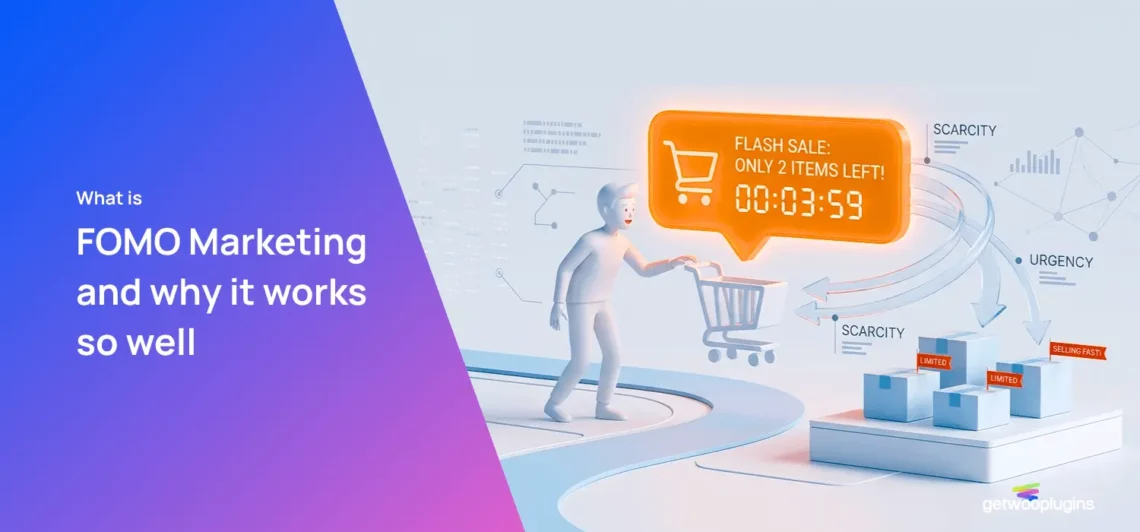
FOMO marketing-short for Fear of Missing Out-is a powerful psychological trigger used by brands to drive urgency, boost conversions, and increase engagement. It taps into the human instinct to avoid regret by emphasizing scarcity, limited-time offers, or exclusive access.
When customers believe they might lose out on something valuable, they’re far more likely to act immediately. This emotional response is not just a trend; it’s a proven strategy rooted in behavioral psychology and widely adopted across e-commerce, social media, and digital advertising.
In today’s fast-paced digital landscape, attention spans are short and competition is fierce. FOMO marketing cuts through the noise by creating a sense of immediacy. Whether it’s a flash sale ending in two hours or a product selling out fast, the message is clear: act now or miss out forever.
This technique doesn’t just increase sales-it builds brand loyalty by making customers feel part of an exclusive group. For online retailers, especially those using platforms like WooCommerce, mastering FOMO can mean the difference between a stagnant store and a thriving business.
How FOMO Marketing Triggers Consumer Behavior
At its core, FOMO marketing leverages a deep-seated emotional response: the fear of being left behind. This isn’t just about wanting a product-it’s about wanting to be included, informed, and ahead of the curve. When people see others enjoying a deal, product, or experience they don’t have access to, their brain activates reward and social comparison centers. This triggers a desire to “catch up” or “keep up,” often leading to impulsive purchases.
Neuroscientists have shown that FOMO activates the same brain regions associated with physical pain. In other words, missing out literally feels bad. Marketers exploit this by using real-time notifications, countdown timers, and social proof to amplify the sensation.
For example, displaying messages like “Only 3 left in stock!” or “5 people are viewing this right now” creates a subtle but powerful pressure to act. These cues don’t just inform-they provoke.
Key Psychological Drivers Behind FOMO
- Scarcity: Limited quantities or time-bound offers make products feel more valuable.
- Social Proof: Seeing others buy or engage increases perceived desirability.
- Exclusivity: Access restricted to certain users (e.g., VIP members) enhances perceived status.
- Urgency: Countdown timers and expiration dates push immediate action.
These elements work together to create a psychological “push” that overcomes hesitation. Unlike traditional advertising, which relies on rational appeals, FOMO marketing speaks directly to emotion. That’s why it’s especially effective in e-commerce, where decisions are often made quickly and impulsively.
Real-World Examples of FOMO Marketing Done Right
Some of the most successful brands in the world use FOMO marketing as a core strategy. Take Amazon’s “Lightning Deals”, these time-sensitive offers appear with a ticking clock and real-time purchase updates. Shoppers see how many people have bought the item and how much time remains, creating intense pressure to click “Buy Now.” The result? Skyrocketing conversion rates during peak shopping periods.
Another standout example is Booking.com, which frequently displays messages like “Only 2 rooms left at this price!” or “12 people are looking at this hotel right now.” These alerts don’t just inform-they manipulate perception. Even if the data is slightly exaggerated or algorithmically generated, the effect is real: users book faster to avoid disappointment.
Fashion brands like Zara and ASOS also excel at FOMO. They release limited-edition collections with short availability windows. Once an item sells out, it’s often gone for good-no restocks. This strategy not only drives immediate sales but also builds long-term brand desirability. Customers learn to act fast or risk missing out entirely.
FOMO in Social Media and Influencer Campaigns
Social media platforms are fertile ground for FOMO marketing. Instagram Stories, TikTok challenges, and Snapchat filters often promote time-limited content. Influencers amplify this by sharing “behind-the-scenes” access or exclusive promo codes that expire in 24 hours. Followers feel privileged but also pressured to engage before the window closes.
For example, a beauty brand might partner with a popular influencer to launch a new lipstick shade available only for 48 hours. The influencer posts daily reminders, shares user-generated content, and highlights how quickly stock is depleting. This creates a viral loop: more visibility leads to more FOMO, which leads to more sales.
Implementing FOMO Marketing on Your WooCommerce Store
If you run an online store using WooCommerce, integrating FOMO marketing is easier than you think and highly effective. The key is to use real-time data and visual cues that trigger urgency. Start by adding countdown timers to product pages for flash sales or seasonal promotions. These timers should be prominent and clearly visible, ideally near the “Add to Cart” button.
Another powerful tactic is displaying live purchase notifications. Some plugins show recent buyer activity, such as “Sarah from London just bought this jacket.” This leverages social proof and scarcity simultaneously. Even if only a few people have purchased, the notification creates the illusion of high demand.
Stock-level alerts are equally important. Use dynamic messaging like “Only 2 left!” or “Selling fast-don’t miss out!” to nudge hesitant buyers. These messages should update in real time as inventory changes. For best results, combine them with low-stock thresholds so the alert only appears when inventory is genuinely low.
To maximize conversions and customer retention, every brand should build a data-driven e-commerce marketing strategy that complements FOMO-based campaigns perfectly.
Enhancing FOMO with WooCommerce Variation Swatches and Image Galleries
To maximize the impact of FOMO marketing, consider upgrading your product presentation with WooCommerce Variation Swatches and WooCommerce Variation Gallery plugins. These tools don’t just improve user experience; they amplify psychological triggers that drive conversions.
The WooCommerce Variation Swatches plugin replaces dull dropdown menus with visual swatches for colors, sizes, and styles. When customers see a vibrant red dress or a sleek black shoe instantly appear as they hover over a swatch, the product feels more tangible.
This immediacy increases emotional attachment and reduces decision fatigue. Pair this with a FOMO message like “Only 1 left in size M!” and you create a powerful one-two punch: visual appeal plus urgency.
Similarly, the WooCommerce Variation Gallery plugin allows for high-quality, zoomable product images with smooth transitions and lightbox effects. When shoppers can inspect every detail-texture, stitching, fit, they feel more confident in their purchase.
But confidence isn’t the only emotion at play. A rich gallery also makes the product feel more exclusive and desirable. Add a banner that says “Limited stock-only 3 remaining!” and you’ve turned browsing into buying.
Together, these plugins enhance the sensory experience of shopping online. They make products feel real, urgent, and worth acting on exactly what FOMO marketing aims to achieve. When customers see a beautiful image of a product they love, with a clear signal that it might sell out, the fear of missing out becomes almost irresistible.
Common Mistakes to Avoid in FOMO Marketing
While FOMO marketing is highly effective, it can backfire if not used ethically or strategically. One major mistake is overusing urgency cues. If every product page shows “Only 1 left!” or “Sale ends in 10 minutes!” all the time, customers become skeptical. They start to question whether the scarcity is real or just a gimmick. Once trust is lost, FOMO loses its power.
Another pitfall is poor timing. Launching a flash sale during low-traffic hours or failing to promote it properly reduces its impact. FOMO works best when there’s genuine momentum. Use analytics to identify peak shopping times and align your campaigns accordingly.
Avoid misleading claims. Saying “90% off” when the discount is actually 30% damages credibility. Similarly, fake countdown timers or inflated stock numbers can lead to customer frustration and negative reviews. Transparency builds long-term trust, even when using psychological tactics.
Ethical Considerations in FOMO Marketing
- Always base scarcity on real inventory or time limits.
- Don’t manipulate data to create false urgency.
- Provide clear terms and conditions for promotions.
- Allow customers to opt out of push notifications or alerts.
Ethical FOMO marketing doesn’t deceive; it informs. It respects the customer’s intelligence while appealing to their emotions. When done right, it builds loyalty, not resentment.
Measuring the Success of Your FOMO Campaigns
To know if your FOMO marketing efforts are working, you need to track the right metrics. Start with conversion rate: are more visitors turning into buyers during FOMO campaigns? Compare sales during flash sales to regular periods. A significant spike indicates success.
Monitor average order value (AOV). FOMO often encourages impulse buys, which can increase basket size. If customers are adding more items to their cart during limited-time offers, that’s a positive sign.
Track engagement on social media and email campaigns. Are your “Last Chance” emails getting higher open and click-through rates? Are Instagram Stories with countdown stickers generating more DMs or visits to your store?
Use A/B testing to refine your approach. Try different FOMO messages-“Only 2 left!” vs. “Selling out fast!”; and see which performs better. Test placement of countdown timers: above the fold vs. near the price. Small tweaks can lead to big improvements.
Key Performance Indicators (KPIs) for FOMO Marketing
- Conversion rate during FOMO campaigns
- Cart abandonment rate (should decrease with urgency)
- Email open and click rates for time-sensitive offers
- Social media engagement on FOMO-related posts
- Return on ad spend (ROAS) for FOMO-driven ads
Regularly reviewing these metrics helps you optimize future campaigns and allocate budget more effectively.
Future Trends in FOMO Marketing
As technology evolves, so does FOMO marketing. Artificial intelligence is enabling hyper-personalized urgency. Imagine a system that detects when a user has viewed a product multiple times but hasn’t bought it, then triggers a personalized pop-up: “You’ve been eyeing this jacket for 3 days. Only 1 left in your size!”
Augmented reality (AR) is another frontier. Brands like IKEA and Sephora let customers “try before they buy” using AR. Adding FOMO elements like “This shade is trending and selling fast!” can turn a virtual try-on into an immediate purchase.
Voice commerce and smart speakers are also opening new FOMO opportunities. Imagine Alexa saying, “Your favorite brand just dropped a limited edition-only 100 available. Want to order now?” The convenience and immediacy could redefine impulse buying.
Blockchain and NFTs are introducing digital scarcity in new ways. Limited-edition digital collectibles use FOMO to drive demand, with buyers racing to secure rare items before they’re gone. While still emerging, this trend shows how FOMO transcends physical products.
Key Takeaways
- FOMO marketing leverages the fear of missing out to drive urgency and increase conversions.
- It works by triggering psychological responses like scarcity, social proof, and exclusivity.
- Real-world examples from Amazon, Booking.com, and fashion brands prove its effectiveness.
- WooCommerce stores can implement FOMO using countdown timers, stock alerts, and live purchase notifications.
- Plugins like WooCommerce Variation Swatches and WooCommerce Variation Gallery enhance product appeal and amplify FOMO triggers.
- Avoid overuse and dishonesty-ethical FOMO builds trust and long-term loyalty.
- Measure success with KPIs like conversion rate, AOV, and engagement metrics.
- Future trends include AI personalization, AR integration, and voice-activated FOMO.
FAQ
What is FOMO marketing?
FOMO marketing is a strategy that uses the fear of missing out to encourage immediate action. It relies on psychological triggers like scarcity, urgency, and social proof to drive purchases, sign-ups, or engagement.
Is FOMO marketing ethical?
Yes, when used honestly. Ethical FOMO marketing is based on real-time data-actual low stock, genuine time limits, and authentic social proof. Misleading customers with fake scarcity damages trust and brand reputation.
How can I add FOMO to my WooCommerce store?
You can use plugins like WooCommerce Sales Pop, countdown timers, and stock-level alerts. Enhance the experience further with WooCommerce Variation Swatches for visual selection and WooCommerce Image Gallery for immersive product views-both amplify FOMO by making products feel more desirable and urgent.

