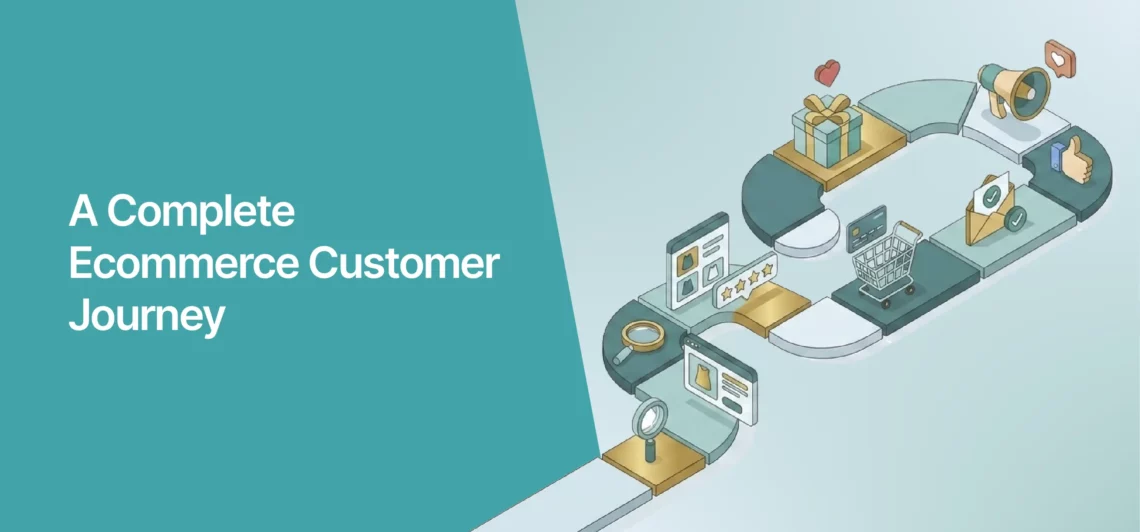
What happens the moment a shopper lands on your online store? The ecommerce customer journey is the full path a consumer takes-from first discovering your brand to making a purchase and beyond. It’s not just about clicking “buy now.”
It’s a carefully orchestrated sequence of touchpoints, emotions, and decisions that determine whether a visitor becomes a loyal customer. Understanding this journey is essential for any online retailer aiming to boost conversions, reduce cart abandonment, and build lasting relationships.
Every stage, like awareness, consideration, decision, purchase, and post-purchase, plays a critical role. But the real magic happens when you align your store’s design, content, and functionality with what customers actually need at each step. From intuitive navigation to immersive product visualization, every detail shapes the experience.
And with tools like WooCommerce Variation Swatches and Additional Variation Images Gallery for WooCommerce, you can elevate that experience, especially on mobile devices where over 60% of ecommerce traffic originates.
Why the Ecommerce Customer Journey Matters More Than Ever
In today’s digital marketplace, competition is fierce. Shoppers have endless options, and their patience is thin. A single friction point, slow loading, unclear product details, or confusing checkout can send them straight to a competitor. That’s why mapping and optimizing the e-commerce customer journey isn’t just a nice-to-have; it’s a business necessity.
When you understand how customers move through your site, you can anticipate their needs, remove obstacles, and guide them seamlessly toward conversion. For example, a visitor who lands on a product page but can’t easily compare color or size options may leave without buying.
But with WooCommerce Variation Swatches, they can instantly see and select different variants, like fabric type or finish, without reloading the page. This small improvement reduces cognitive load and increases confidence, directly impacting conversion rates.
Stages of the E-commerce Customer Journey
1. Awareness: Capturing Attention in a Crowded Market
The journey begins when a potential customer becomes aware of your brand or product. This could happen through social media, search engines, email campaigns, or word-of-mouth. At this stage, your goal is to stand out and provide value-whether through informative blog content, engaging ads, or compelling visuals.
But awareness alone isn’t enough. You need to guide visitors toward your store with clear calls-to-action and seamless transitions. For instance, if someone clicks an Instagram ad for a pair of sneakers, they should land on a dedicated product page-not a generic homepage. This continuity builds trust and keeps the momentum going.
2. Consideration: Building Trust and Comparing Options
Once on your site, customers enter the consideration phase. They’re evaluating your products against competitors. They’re reading reviews, checking specs, and comparing prices. This is where product presentation becomes critical.
Imagine a shopper looking at a watch with multiple strap options. Without clear visuals, they might struggle to imagine how each variant looks. But with the Additional Variation Images Gallery For WooCommerce, each selection-leather, metal, or silicone-triggers a high-resolution image update.
This dynamic visualization helps customers make informed decisions faster, reducing hesitation and increasing the likelihood of purchase.
Mobile users, in particular, benefit from this feature. On smaller screens, every tap counts. Instant image updates mean less scrolling and fewer misclicks, creating a smoother, more enjoyable shopping experience.
3. Decision: Turning Interest into Action
The decision stage is where the sale happens-or doesn’t. At this point, customers are ready to buy but may still have last-minute doubts. Is the product the right size? Will it arrive on time? Can I return it if needed?
To ease these concerns, your product pages must be rich with information and interactive elements. WooCommerce Variation Swatches allows customers to click on color swatches or size buttons and instantly see how the product changes. This interactivity mimics the in-store experience, giving shoppers the confidence that they’re choosing the right option.
Additionally, displaying stock levels, shipping estimates, and return policies prominently can eliminate friction. When customers feel informed and in control, they’re far more likely to complete their purchase.
4. Purchase: Streamlining the Checkout Process
The checkout is the final hurdle. Even if a customer has made it this far, a complicated or lengthy process can cause abandonment. Keep it simple: minimize form fields, offer guest checkout, and support multiple payment methods.
But don’t stop at functionality. Reinforce trust with security badges, SSL indicators, and clear progress bars. A smooth, transparent checkout experience reassures customers that their data is safe and their order is confirmed.
5. Post-Purchase: Turning Buyers into Advocates
The journey doesn’t end at checkout. In fact, the post-purchase phase is where loyalty is built. Send a confirmation email, provide tracking information, and follow up with a thank-you message. Encourage reviews and offer incentives for referrals.
Happy customers are more likely to return and recommend your store to others. And when they do come back, a well-optimized product experience, powered by plugins like variation swatches and image galleries, makes repurchasing effortless.
How Product Visualization Enhances the Customer Journey
One of the biggest challenges in e-commerce is the inability to touch or try products. Customers rely heavily on visuals to make decisions. That’s why product presentation is a cornerstone of the ecommerce customer journey.
High-quality images, zoom functionality, and 360-degree views help, but they’re not enough on their own. Shoppers need to see how different options look in real life. For example, a sofa might look great in beige, but will it match their living room in charcoal grey?
This is where PikSprout – Image Hotspot for Gutenberg shines. It transforms your images into interactive shopping experiences by linking products, videos, reviews, and more directly to your images, creating a dynamic and engaging way to boost conversions and captivate your customers.
This creates a personalized, immersive experience that closely mimics in-store shopping.
Improving UX and Conversion Rates with Interactive Elements
User experience (UX) directly impacts conversion rates. A confusing layout, slow performance, or lack of clarity can drive customers away. But thoughtful design and smart plugins can turn those pain points into opportunities.
Consider a clothing retailer selling t-shirts in 10 colors and 5 sizes. Without variation swatches, customers might have to click through multiple dropdown menus or reload the page to see each option. This friction leads to frustration and abandonment.
With WooCommerce Variation Swatches, each color appears as a clickable swatch, and sizes are displayed as buttons. The product image updates instantly, and the price adjusts if needed. This seamless interaction reduces decision time and boosts confidence.
Moreover, these swatches are mobile-friendly. On smartphones, large, tappable elements make selection easy, even on small screens. This responsiveness is crucial for capturing mobile shoppers, who now account for the majority of online purchases.
Building Customer Confidence Through Clarity and Control
Confidence is a major factor in the ecommerce customer journey. Shoppers want to feel certain they’re making the right choice. Ambiguity-whether about fit, color, or functionality-creates doubt.
Interactive product displays eliminate that doubt. When customers can see exactly what they’re buying, they’re more likely to trust your brand and complete the purchase. The Additional Variation Images Gallery For WooCommerce supports this by showing detailed, context-rich images for every variant.
For example, a customer buying running shoes can view each color option in action, on a treadmill, on a trail, or paired with athletic wear. These lifestyle images help them visualize ownership, increasing emotional connection and purchase intent.
Additionally, clear labelling and intuitive navigation reinforce control. When users feel in charge of their experience, they’re more engaged and less likely to abandon their cart.
Mobile Optimization: The Future of Ecommerce
Mobile commerce isn’t just growing-it’s dominating. Over 70% of ecommerce traffic comes from mobile devices, and that number continues to rise. Yet many stores still treat mobile as an afterthought.
To succeed, your ecommerce customer journey must be optimized for mobile from the ground up. That means fast loading times, responsive design, and touch-friendly interfaces.
Plugins like WooCommerce Variation Swatches and Additional Variation Images Gallery for WooCommerce are built with mobile in mind. Swatches are large and spaced for easy tapping, while image galleries support swipe gestures and pinch-to-zoom. These features ensure that mobile users enjoy the same rich experience as desktop shoppers.
Moreover, mobile-optimized journeys reduce cognitive load. When customers can make quick, confident decisions on their phones, they’re more likely to convert-even during short browsing sessions.
Key Takeaways: Optimizing the Ecommerce Customer Journey
- The ecommerce customer journey spans five stages: awareness, consideration, decision, purchase, and post-purchase. Each requires tailored strategies to guide customers toward conversion.
- Product visualization is critical. Tools like WooCommerce Variation Swatches and Additional Variation Images Gallery for WooCommerce enhance clarity, reduce hesitation, and improve mobile usability.
- Interactive elements such as clickable swatches and dynamic image galleries create a more engaging, in-store-like experience that builds trust and confidence.
- Mobile optimization is no longer optional. Responsive design and touch-friendly features are essential for capturing the majority of online shoppers.
- A seamless, frictionless journey leads to higher conversion rates, lower cart abandonment, and increased customer loyalty.
You can check out our another goldmine complete guideline for the e-commerce marketing strategy to grow your store’s sales in 2026.
FAQ: Ecommerce Customer Journey
What is the ecommerce customer journey?
The ecommerce customer journey is the complete path a shopper takes from discovering your brand to making a purchase and beyond. It includes awareness, consideration, decision, purchase, and post-purchase stages, each influencing whether a visitor becomes a customer.
How do variation swatches improve the shopping experience?
Variation swatches allow customers to click on color, size, or material options and see instant updates on the product page. This interactivity reduces confusion, speeds up decision-making, and enhances mobile usability, leading to higher conversion rates.
Why are dynamic image galleries important for product pages?
Dynamic image galleries, like those enabled by the Additional Variation Images Gallery For WooCommerce, show unique visuals for each product variant. This helps customers visualize differences clearly, builds confidence in their choice, and reduces the likelihood of returns.

