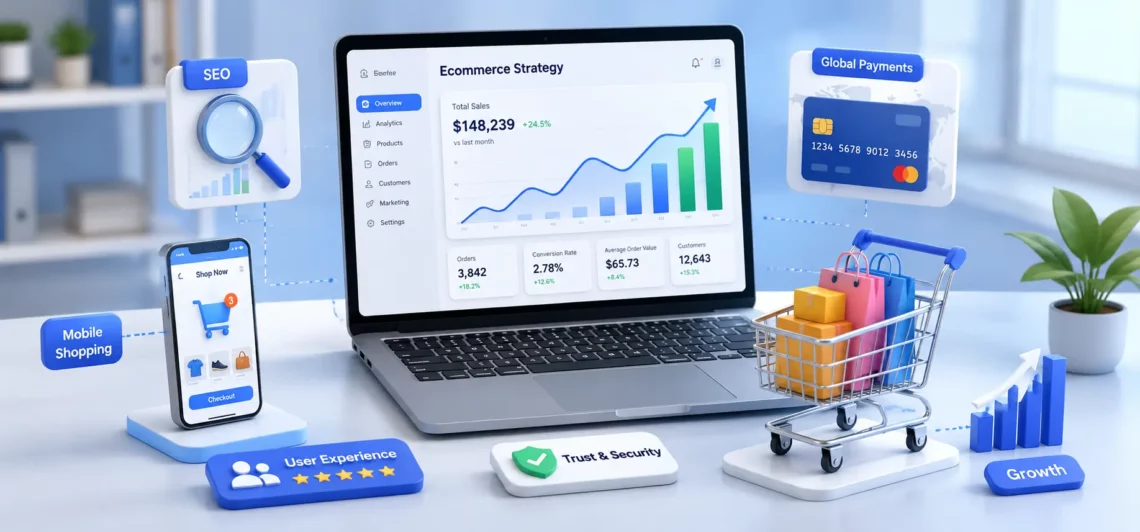
Selling things online is a big business. To do well, you need a good ecommerce strategy. This is like a clear plan for your online store. The internet changes fast, and many new online shops open every day. So, businesses need a strong plan to not just stay alive, but to grow and make more money.
This guide is for everyone: new online sellers, Shopify or WooCommerce store owners, or marketing managers. It will help you understand how to build, make better, and grow your online business. We will share simple ideas, useful steps, and real examples. Our goal is to make this the most helpful guide for you to increase your sales.
We will cover basic ideas, important success factors, and smart ways to improve your store. We will also talk about how to use tools like WooCommerce plugins. Every part of this guide will teach you something useful and easy to use. Get ready to change how you sell online and start growing your business.
1. What is Ecommerce Strategy?
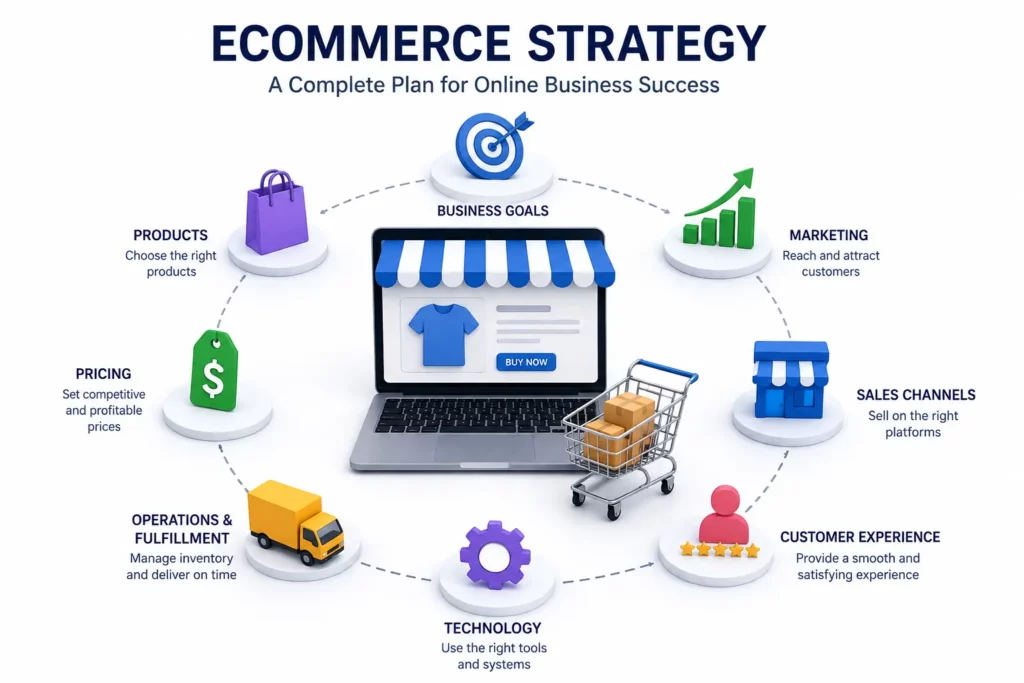
An ecommerce strategy is a full plan for an online business. It shows how the business will reach its goals. These goals include getting customers, making sales, keeping customers happy, and growing over time. It covers everything an online store does: choosing products, setting prices, marketing, selling channels, how customers experience the store, the technology used, and how products are sent out.
This is more than just a marketing plan. An ecommerce strategy looks at the whole business. It brings all parts together to make a strong and effective way to sell online.
What is Ecommerce Strategy? (Simple Definition)
An ecommerce strategy is a clear plan for an online business. It brings together products, marketing, sales, customer experience, technology, and operations. The goal is to reach business targets and grow steadily in the online market.
Simply put, a good ecommerce strategy means you understand your target customers. You find new chances in the market. You use technology well. And you always make the customer journey better. This helps you get more sales (conversion optimization) and keep customers coming back (customer retention). It’s about making smart choices to increase online sales and build a strong digital commerce presence.
2. Why is Ecommerce Strategy Important?
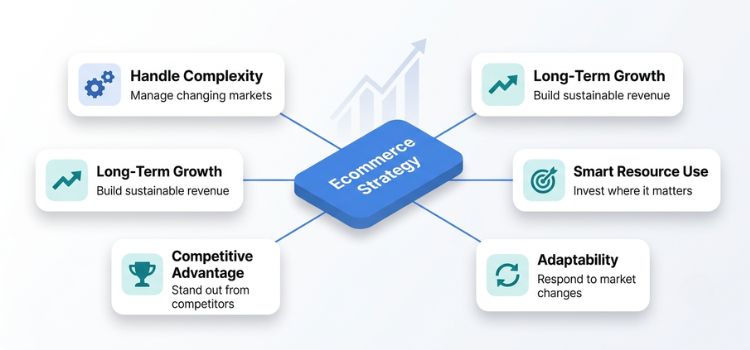
Today, many businesses sell online, and the competition is tough. A clear ecommerce strategy is very important for several reasons:
- Handles Complexity: The online world is always changing. New technologies, platforms, and customer habits appear often. A clear strategy helps you deal with these changes. It makes sure all your efforts work together for the same goals.
- Helps Long-Term Growth: Without a good plan, businesses might get quick sales but not last long. A strong strategy focuses on lasting ways to grow. This includes building customer lifetime value (how much a customer spends over time) and getting repeat purchases. It’s not just about following short-term trends.
- Uses Resources Wisely: An ecommerce strategy helps businesses use their money, time, and staff in the best way. It focuses on actions that give the best results. This stops you from wasting effort on things that don’t work.
- Gives an Edge Over Others: In a crowded market, being different is key. A unique and well-done strategy can make your business stand out. This could be through a great shopping experience, new ways for product discovery, or a special brand voice.
- Adapts to Change: The digital world is fast. A strategic mindset helps businesses be flexible. They can quickly change when the market shifts, new technology comes out, or customer needs change. This includes being ready for things like mobile commerce and store optimization.
In short, an ecommerce strategy is important because it can change an online store. It turns it from just a place to buy things into a powerful way to grow, make money, and build strong customer relationships. It’s the difference between just selling products and building a successful online business.
3. How to Create a Good Ecommerce Strategy
To make a successful ecommerce strategy, you need a clear plan. Don’t just guess. Use facts and focus on your customers. This helps you build a strong plan that can change with the market and always give value. Here is a simple step-by-step plan to help you:
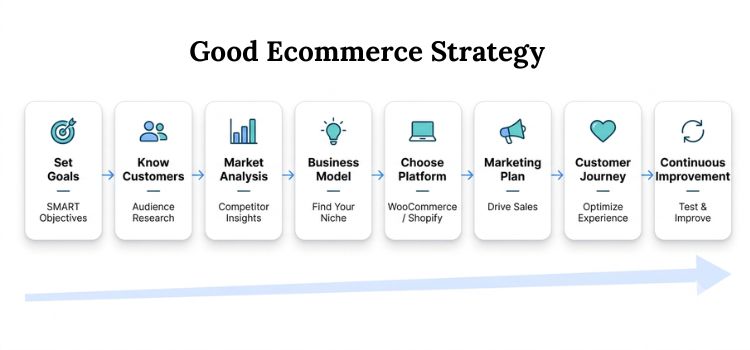
Easy Steps to Create an Ecommerce Strategy
- Know Your Goals: Clearly say what you want to achieve. For example, how much market share, sales, or happy customers. These goals should be SMART: Specific, Measurable, Achievable, Relevant, and Time-bound.
- Understand Your Customers: Create detailed profiles of your ideal customers. What do they need? What problems do they have? How do they shop online? This information helps you with everything, from making products to writing ads.
- Look at the Market and Competitors: Find out what’s new, what chances you have, and what other businesses are doing. What do your competitors do well? Where are they weak?
- Choose Your Business Model and Niche: Decide what products you will sell, how you will price them, and what makes you special. How will you stand out?
- Pick Your Platform and Technology: Choose an ecommerce platform (like Shopify or WooCommerce). Then, add the tools you need for marketing, checking data, and running your business.
- Plan Your Marketing and Sales: Decide how you will attract, interest, sell to, and keep customers using different ways.
- Make the Customer Journey Better: Map out and improve every step a customer takes with your brand, from first seeing it to getting help after buying.
- Keep Changing and Improving: The online world never stops. Always check your plan, try new things, and be ready to change based on how well you do and what the market tells you.
Understanding Your Customer Journey
How does a customer’s experience affect online sales? The customer journey is every step a customer takes when they interact with your brand. This starts from when they first learn about you until they get help after buying. Making this journey good is very important.
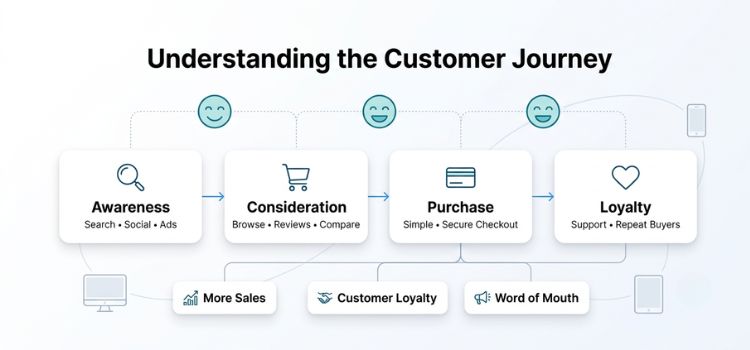
A smooth and positive customer experience means more sales, more loyal customers, and good word-of-mouth. By 2026, customers will expect personal, easy, and consistent interactions on all devices: computers, phones, or social media.
Important steps in today’s online shopping journey include:
- Learning About You: How customers find your brand (e.g., search engines, social media, ads).
- Thinking About Buying: Looking at products, reading reviews, comparing choices.
- Deciding to Buy: Making the purchase. This is often easier if checkout is simple and they trust you.
- Staying with You: What happens after they buy, customer service, and loyalty programs.
Making Customers Stay Longer (Lifetime Value)
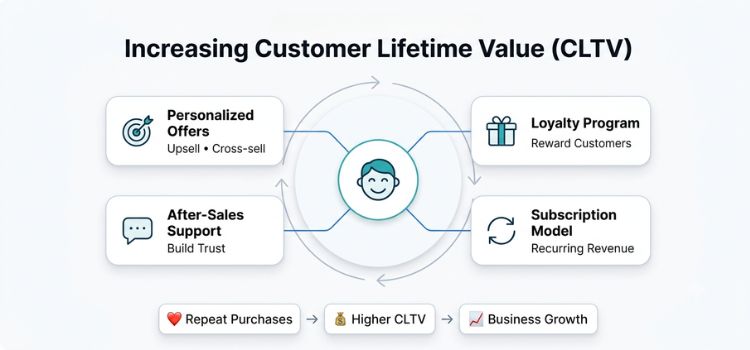
How do successful online stores grow? Smart online stores know that getting new customers costs more than keeping old ones. This is why customer lifetime value (CLTV) is so important. CLTV is the total money a customer is expected to spend with your business over time. To make CLTV higher, you can use these ideas:
- Personal Product Ideas: Use customer data to suggest products they might like. This helps increase the average order value (AOV) by upselling (selling a more expensive item) and cross-selling (selling related items).
- Loyalty Programs: Give rewards to customers who buy often or interact with your brand. This builds long-term relationships.
- Great Help After Buying: Offer excellent customer service, easy returns, and clear communication. This builds trust and makes customers want to buy again (repeat purchases).
- Subscription Plans: Offer products or services that customers can buy regularly. This gives you steady income and keeps customers more involved.
Using Data to Make Decisions
What does checking data do for your business? In online selling, data is very powerful. Just guessing what to do will not help your business grow. A truly good ecommerce strategy uses constant checks of how well things are doing and how customers behave. Analytics gives you the information you need to know what works, what doesn’t, and where new chances are.
Key areas to check with data include:
- Website Data: Tracking where visitors come from, how many leave quickly (bounce rates), how long they stay on pages, and how many complete a purchase.
- Sales Data: Looking at how well products sell, the average money spent per order (AOV), how many customers stay (customer retention), and how many leave items in their cart (shopping cart abandonment).
- Marketing Results: Measuring how much money you earn from different ads and campaigns.
- Customer Feedback: Collecting ideas from reviews, surveys, and customer support talks.
By using this data, businesses can make smart choices. They can improve their plans and make small changes that lead to big growth. This often means A/B testing different parts of the website or marketing campaigns to find the best ways to do things.
4. Main Parts of a Successful Ecommerce Strategy
A strong ecommerce strategy has several key parts. Each part helps the online business succeed. If you ignore any part, the whole plan might fail. Here, we will look at the important pieces that help businesses grow and make money.
Making Product Pages Better

How do product pages help your ecommerce plan? Product pages are like the display windows of your online store. This is where people decide to buy. Making these pages good is very important to turn visitors into buyers. A well-made product page gives full information, builds trust, and guides the customer to buy.
Key things to do for better product pages:
- Good Pictures and Videos: Use many high-quality images, 360-degree views, and product videos. These show the product from all sides. Good visual merchandising helps customers feel sure about what they are buying.
- Clear Descriptions: Write product descriptions that are easy to understand and show benefits. They should answer common customer questions and highlight what makes the product special.
- Customer Reviews: Show real customer reviews and ratings. What others say is a strong reason for people to buy. Reviews build trust and help customers choose well.
- Clear Buttons to Act (CTAs): Have clear and inviting buttons like ‘Add to Cart’ or ‘Buy Now’. They should be easy to see.
- Product Choices: It’s important to show different options (like sizes, colors, materials) clearly. For stores using WooCommerce, plugins like Variation Swatches for WooCommerce can make shopping much better. This plugin changes normal dropdown menus into colorful swatches, buttons, or images. This makes it easier for shoppers to pick what they want quickly. It leads to more items being added to the cart (higher add-to-cart rate). Also, Additional Variation Images Gallery For WooCommerce lets you show many pictures for each choice. This helps customers see exactly what they are buying. It can also mean fewer returns because customers know what to expect.
- Works on Phones: Make sure product pages load fast and look right on all devices, especially mobile phones. More and more people shop on their phones (mobile commerce).
Improving How Many Visitors Buy (Conversion Rate Optimization – CRO)
How can you get more people to buy from your online store? Conversion rate optimization (CRO) is a planned way to increase the number of website visitors who do what you want, like buying something. It means understanding how people use your site, what they do, and what stops them from buying.
Expert Tip: Test Your Ideas with A/B Testing
Don’t guess, test! Use A/B testing for different parts of your product pages and checkout. Test headlines, button colors, picture places, and even the words you use for your ‘Buy Now’ buttons. Small changes can greatly improve your conversion rate optimization efforts.
Good CRO plans often focus on:
- Making the Website Easy to Use (UX): Make your website simple, easy to find things on, and nice to look at. A good user experience means less frustration and more exploring.
- Removing Problems: Find and fix things that make it hard for customers to buy. This is especially true during checkout. Make forms simple, let people buy without making an account, and make sure pages load fast (website speed).
- Clear Call-to-Action Buttons: Make sure your ‘Buy Now’ buttons are clear, inviting, and in the right places.
- Building Trust: Show security badges, customer stories, and clear return rules. This makes customers feel safe.
- Personal Touch: Show content and product ideas that fit what each user likes. This is based on what they have looked at before. It makes the shopping experience more personal.
CRO is a continuous process. You need to keep watching, checking, and trying new things to get the best results.
Search Engine Optimization (SEO)
How important is SEO? Ecommerce SEO means making your online store show up higher in search engine results (like Google). This brings more people to your site without paying for ads. For many businesses, getting found through search is a main way to get good customers and sales. So, SEO is a very important part of any good ecommerce strategy.
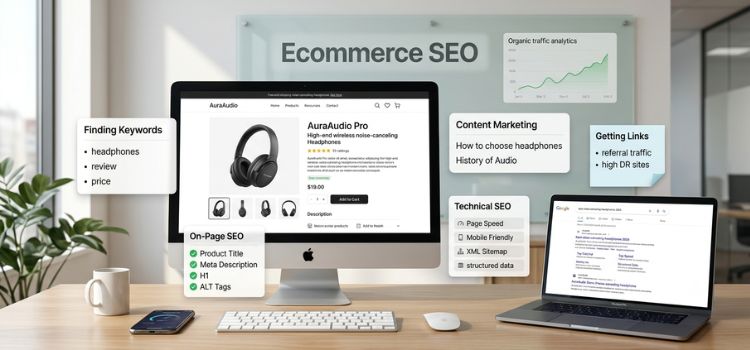
Good ecommerce SEO is more than just using keywords. It also includes making your website work well technically, planning your content, and getting links from other websites.
Key parts of ecommerce SEO include:
- Finding Keywords: Finding the right words that your customers type into search engines to look for products and information. This includes longer phrases and related words like ecommerce marketing strategy and online store strategy.
- On-Page SEO: Making each product page, category page, and blog post better by using keywords in titles, descriptions, headings (H1, H2, H3), and the text itself. This also means making sure your product page optimization is good.
- Technical SEO: Making sure search engines can easily find and understand your website. This includes making your website speed fast, making sure it works well on mobile phones, and having a clear website structure.
- Content Marketing: Creating helpful and interesting articles (like this one!) that answer customer questions and solve their problems. This shows you are an expert and builds trust, which is key for EEAT (Experience, Expertise, Authoritativeness, Trustworthiness).
- Getting Links: Getting good quality links from other trusted websites. This helps your website look more important to search engines and rank higher.
Common Mistake: Forgetting Technical SEO
Many online businesses only focus on writing good content and using keywords. They forget about important technical SEO things like how fast the site loads, if it works on mobile, or how search engines read the site. These technical basics are very important for search engines to find your site and for customers to have a good experience. They directly affect your rankings and how many visitors buy from you.
Customer Experience (CX) and Mobile Use
How important is it for your website to work well on mobile phones? Today, most people use smartphones. So, mobile commerce is not just a new idea; it’s how many customers shop online. A smooth and easy customer experience (CX) on all devices is a must for a good ecommerce strategy. If your website doesn’t work well on mobile, people will leave quickly, get frustrated, and you will lose sales.
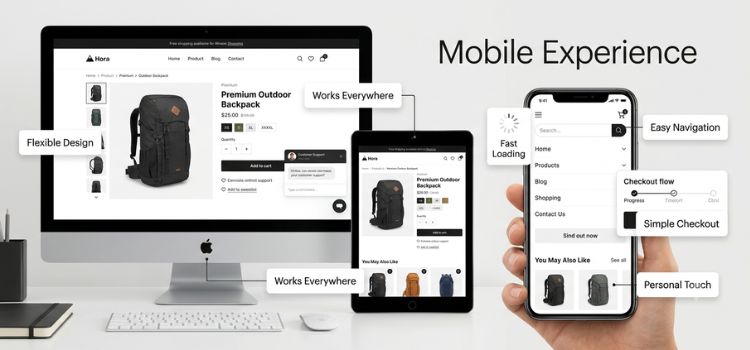
What makes a great online shopping experience and good mobile use:
- Flexible Design: Your website should look perfect on any screen size, from computers to tablets and phones.
- Fast Loading: Mobile users expect things to be quick. Use small images and simple code to make pages load fast.
- Easy to Navigate: Have simple, clear menus and search tools. This helps mobile users find products quickly.
- Simple Checkout: Make the checkout process easy and quick on mobile. Use fewer forms and show how many steps are left.
- Personal Touch: Show products and content that fit what each user likes. This is based on what they have looked at before. It makes the shopping experience better.
- Works Everywhere: Give customers a smooth experience no matter how they interact with your brand. This means on their phone, computer, or when talking to customer service.
Payment Methods and Easy Checkout
How do payment options affect sales? The checkout page is the last step before a customer buys. If anything is difficult here, many people will leave their cart without buying (shopping cart abandonment). Making the checkout optimization good and offering many safe payment gateways are key to getting more sales and building trust.
Things to think about for payments and checkout:
- Many Ways to Pay: Offer popular payment methods that your customers use. This includes credit cards, digital wallets (like Apple Pay), and local payment options. For customers in other countries, offering many choices is very important for global selling.
- Safety and Trust: Show security badges and make sure your site is safe for payments. This tells customers their money information is protected.
- Guest Checkout: Let customers buy without making an account. This makes it easier for new buyers.
- One-Page Checkout: If possible, make the checkout process one simple page.
- Show Progress: Let customers see how many steps are left in the checkout. This helps them feel less worried.
- Help with Errors: If a customer makes a mistake, give them clear and helpful messages.
For WooCommerce stores, using a strong payment tool like Payment Gateway – 2Checkout for WooCommerce can be a smart move. This tool supports many payment types and currencies. This is very helpful for international customers.
It helps stop people from leaving their carts by offering flexible payments and building trust. The goal is to make paying as easy and safe as possible, fitting what different customers prefer, and helping with conversion optimization.
Showing Products Well and Offering Choices
How do different product choices help online sales? Good product merchandising means showing your products in a smart way to make them look good and sell more. This includes how products are shown, grouped, and highlighted on your online store. Managing product variations (like different colors or sizes) well is key. It helps customers easily find and pick the exact product they want.
Tips for showing products and choices well:
- Clear Groups and Filters: Organize products in a logical way. Give good filter options so customers can quickly find what they are looking for.
- Great Product Photos: Use professional pictures that show details and all the different choices.
- Suggest More Products: Smartly suggest other products that go well with what the customer is looking at (cross-selling). Or suggest a better or more expensive version (upselling). This helps increase the average order value.
- Show Choices Visually: As we said before, tools like Variation Swatches for WooCommerce are very useful. They change dropdown menus into colorful swatches or buttons. This makes it easier for customers to see and pick different product features.
This makes the user experience and product discovery better. It also leads to more items added to the cart (higher add-to-cart rates) and more sales. Also, Additional Variation Images Gallery For WooCommerce makes sure each choice has its own set of pictures. This gives customers a clear idea of what they are buying. It builds trust and can mean fewer returns. - Highlight Special Products: Show your best-sellers, new items, or seasonal collections. This helps guide customer attention.
Managing Stock and Setting Prices
A good inventory strategy makes sure you have products when customers want them. It also helps you avoid having too much stock. This means guessing future sales well, having good storage, and a reliable way to get products. At the same time, a good pricing strategy is important to be competitive and make money. It balances what customers think the product is worth with what the market needs.
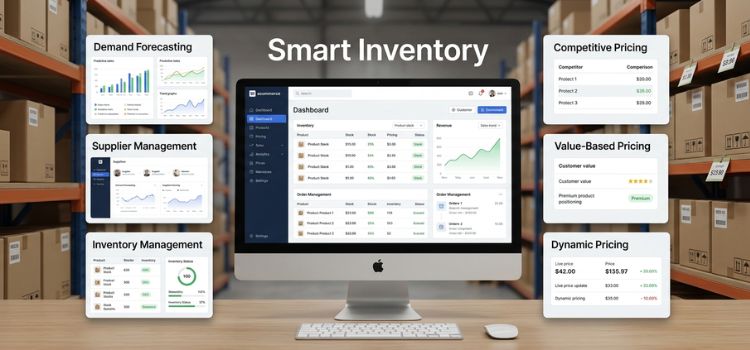
Key points for stock and pricing:
- Guessing Demand: Use past sales and market trends to guess future sales. This helps you keep the right amount of stock.
- Working with Suppliers: Build good relationships with companies that supply your products. This helps you get products on time and get good deals.
- Stock Management Systems: Use systems to track stock levels, manage orders, and avoid running out of products or having too much.
- Competitive Prices: Regularly check what competitors are charging. Adjust your prices to stay competitive, but still make a good profit.
- Value-Based Prices: Set prices based on how much customers think your products are worth. Don’t just base prices on how much they cost you.
- Changing Prices: Change prices in real-time based on demand, how much stock you have, and competitor prices.
These main parts, when planned well and always improved, form the base of a successful online business. They help make customers happy and increase profits.
5. Ecommerce Strategy vs. Ecommerce Marketing vs. Digital Marketing
People often use the words ecommerce strategy, ecommerce marketing, and digital marketing as if they mean the same thing. But they are different. Knowing these differences is important for running a clear and effective online business.
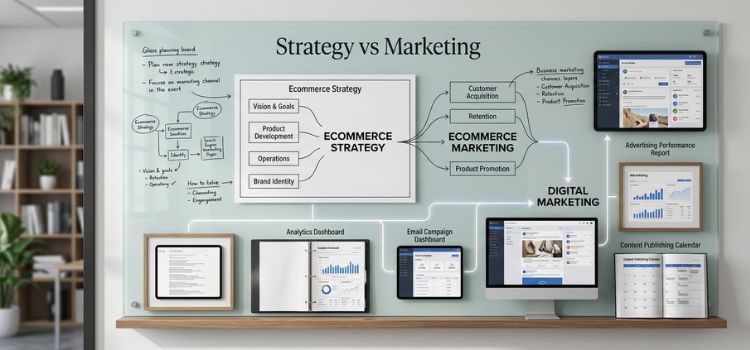
How is ecommerce strategy different from ecommerce marketing?
Ecommerce strategy is the big plan. It explains what an online business wants to achieve and how it will do it. This includes everything from making products to keeping customers happy. It’s the full blueprint for how the online business will work.
Ecommerce marketing is a smaller part of the strategy. It focuses only on the ways you get people to visit your online store, get them interested, and make them buy. This includes things like SEO, paid ads, social media ads, email campaigns, and writing content.
All these are made for online stores. So, marketing is a tool used within the bigger strategy to reach the main goals.
How is ecommerce strategy different from digital marketing?
Digital marketing is a very broad term. It means all marketing efforts that use electronic devices or the internet. It can be used by any business, whether they sell online or in a physical store. This includes websites, search engines, social media, email, and mobile apps.
Digital marketing can be used to get new customers, make people aware of a brand, or sell products directly, for many different types of businesses.
Ecommerce strategy is only about selling products or services online. It uses a lot of digital marketing methods. But its focus is narrower (only online sales) and deeper in terms of how the business runs. This includes things like managing stock, shipping, payment options, and checkout optimization.
These are special to online retail. An ecommerce strategy uses digital marketing, but it also includes things like product page optimization, conversion rate optimization, and mapping the customer journey. These are unique to selling online.
| What it is | Ecommerce Strategy | Ecommerce Marketing | Digital Marketing |
|---|---|---|---|
| What it covers | The full business plan for selling online | Ways to promote and sell products online | All online ways to promote any business |
| Main focus | Overall business goals, how it runs, and growth | Getting visitors, making them interested, and buying | Making people aware of the brand, getting leads, sales |
| Key questions | What to sell, how to run, who to sell to | How to reach customers, how to make them buy | How to reach people online |
| Examples | Business plan, choosing platforms, supply chain, CX | SEO, paid ads, social media ads, email campaigns | Content writing, social media, email, website design |
| How they relate | Includes ecommerce marketing | A part of the ecommerce strategy | A bigger field, ecommerce marketing is a part of it |
6. Common Mistakes That Stop Ecommerce Growth
Even with a good plan, businesses can fail if they make common mistakes. Knowing and avoiding these mistakes is just as important as doing things right. This helps your online business keep growing.
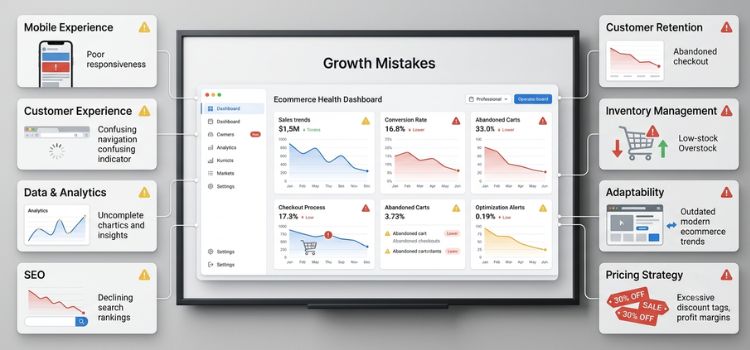
What mistakes stop online stores from growing?
- Not Making Your Site Mobile-Friendly: Many people use their phones to shop online. If your website doesn’t work well, load fast, or is hard to use on a phone, people will leave quickly. You will lose sales. This directly hurts your mobile commerce.
- Bad Customer Experience (CX): If shopping is hard-pages load slowly, navigation is confusing, checkout is difficult, or customer help is bad-customers will go somewhere else. A good shopping experience is key to keeping customers (customer retention) and building loyalty.
- Not Using Data: Making choices based on feelings instead of facts is a bad idea. If you don’t track important numbers, look at how customers behave, or use insights from analytics, you will miss chances to improve and grow.
- Ignoring SEO: Thinking that just having an online store is enough for people to find you. Without proper ecommerce SEO (like finding keywords, making pages better for search, and technical fixes), your store won’t show up high in search results. This means less free traffic.
- Poor Product Information: If product descriptions are unclear, pictures are bad, or details are missing, customers won’t trust you. This directly affects how good your product page optimization is and how many people buy.
- Hard Checkout Process: Too many forms, forcing people to create an account, or not enough payment options make many people leave their carts (shopping cart abandonment). An easy and safe checkout optimization is very important.
- Forgetting About Customers After They Buy: The customer journey doesn’t end when they buy. If you don’t follow up, offer loyalty programs, or give good customer service, you will have low customer lifetime value and miss chances for repeat purchases.
- Bad Stock Management: Running out of products means lost sales and unhappy customers. Having too much stock costs you money. A smart inventory strategy is a must.
- Not Changing with the Times: The online shopping world is always changing. Businesses that don’t want to use new technology, follow new customer trends, or deal with competitors will fall behind quickly. This includes keeping up with things like AI Overview optimization and new search features.
- Too Many Discounts: Giving too many discounts might bring quick sales, but it can also lower your profits and make your brand seem less valuable. A balanced pricing strategy that focuses on value is better for the long run.
To avoid these common problems, you need to be watchful. Always use data to make decisions and always put the customer first in every step of your online business journey.
7. How Successful Online Stores Grow: Real Examples
Successful online stores don’t just appear by chance. They are built with smart plans, constant improvements, and a deep understanding of their customers. While each store has its own way, some common ideas help them grow strong.
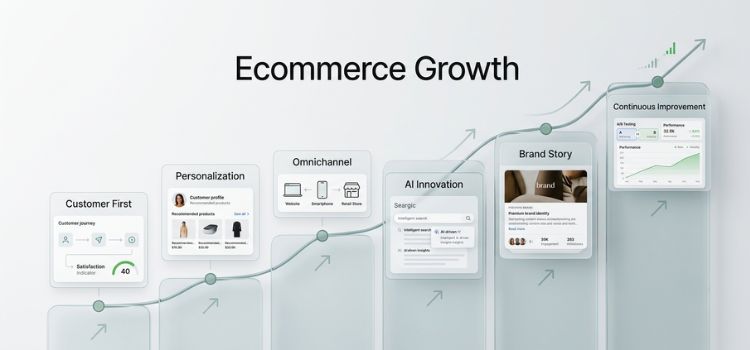
Key Ways Top Online Stores Grow:
- Focus on the Customer: Stores that put the customer journey and shopping experience first always do better than others. This means understanding what customers need, what problems they have, and what they like at every step. Then, they create experiences that make customers happy and keep them coming back.
- Personal Touch with Data: Using information about customers to offer personal product ideas, special messages, and custom website experiences helps a lot. This makes more people buy (conversion optimization) and increases customer lifetime value. For example, big stores like Amazon are very good at this. Their system for suggesting products helps them make many sales.
- Smooth Shopping Everywhere: Good brands make sure shopping feels the same and works well across all places: online, on mobile, on social media, and even in physical stores. This makes shopping easy and lets customers interact with the brand how they want.
- Quick to Use New Technology: Successful brands use new tools like AI. AI helps with better customer service, guessing what customers will do next, and personalizing search results. This helps them stay ahead. For example, many top stores now use AI search to make product discovery better and stop people from leaving when they search.
- Strong Brand Story: Beyond just selling products, good brands connect with their customers emotionally. They tell interesting stories and build a community. This makes customers loyal and helps the brand grow naturally.
- Always Improving: Top brands never stop. They constantly test, measure, and make better every part of their ecommerce strategy. This includes website design, marketing, how they get products, and customer support. This way of always trying to improve, often using A/B testing, helps them get better all the time.
Short Examples of Success:
- Warby Parker: This company changed how people buy glasses. They offered stylish, cheap glasses online and a special way to try them at home. Their success came from selling directly to customers, great customer service, and a smooth online-to-offline experience. They made the customer journey simple and built a brand that customers loved.
- Casper: This brand changed the mattress industry. They sold mattresses directly online, offered a simple product range, and a good return policy. They grew fast because of smart marketing, a focus on user experience, and making customers feel safe when buying a mattress online.
- Sephora: This beauty store has many physical shops, but they are also great online. They have a loyalty program (Beauty Insider), give very personal product ideas, and have a useful mobile app. They mix online and in-store shopping well, making the shopping experience smooth and rewarding. Their use of data to personalize things is a great example of keeping customers (customer retention) and increasing customer lifetime value.
These examples show that growing an online business is not about one secret trick. It’s about combining a good understanding of customers, using technology smartly, and always working to make every part of the business better.
8. Key Numbers to Track for Ecommerce Success (KPIs)
To know if your ecommerce strategy is working and where you can improve, you need to watch certain numbers. These are called Key Performance Indicators (KPIs). These numbers give you clear ideas about how your business is doing, how customers behave, and if your efforts to make things better are working.
What important ecommerce numbers should you track?
Here are some of the most important KPIs for online stores:
- Conversion Rate: This is the percentage of people who visit your website and then do what you want, like buying something. It shows how good your site is at turning visitors into buyers.
- How to calculate: (Number of Sales / Number of Visitors) * 100
- Average Order Value (AOV): This is the average amount of money a customer spends each time they buy. If you can increase AOV (for example, by upselling or cross-selling), you can make more money without getting more visitors.
- How to calculate: Total Money Made / Number of Orders
- Customer Lifetime Value (CLTV): This is how much money a customer is expected to spend with your business over their whole time as a customer. A high CLTV means customers stay loyal (customer retention), which is cheaper than always finding new customers.
- How to calculate: (Average Money per Order * How Often They Buy) * How Long They Stay as a Customer
- Customer Acquisition Cost (CAC): This is the total money you spend to get one new customer. Comparing CAC to CLTV helps you see if getting new customers is worth the cost.
- How to calculate: Total Money Spent on Marketing & Sales / Number of New Customers
- Shopping Cart Abandonment Rate: This is the percentage of customers who put items in their cart but then leave without buying. A high rate means there might be problems with your checkout optimization or other things making it hard to buy.
- How to calculate: (Number of Carts Left / Number of Carts Started) * 100
- Return Rate: This is the percentage of products that customers send back. A high return rate might mean problems with product quality, descriptions, or what customers expect.
- How to calculate: (Number of Items Returned / Number of Items Sold) * 100
- Website Traffic: This is the total number of people who visit your online store. It shows how many people know about your brand and if your marketing (including ecommerce SEO) is working.
- Bounce Rate: This is the percentage of visitors who leave your website after looking at only one page. A high bounce rate can mean the page isn’t what they expected, the website speed is slow, or the user experience is confusing.
- Email Sign-up Rate: This is the percentage of visitors who sign up for your email list. This is important for sending emails and keeping customers interested.
- Social Media Engagement: Numbers like likes, shares, comments, and how many followers you have show how visible your brand is and how well you are building a community.
Quick Tip: Watch Your KPIs
Always check these KPIs to get a full picture of how your online store is doing. Use tools to see trends and find problems. Don’t just look at the numbers; understand why they are what they are. This helps you make smart changes to your plan.
9. Important Tools for Your Ecommerce Strategy (with WooCommerce Plugin Ideas)
To have a good ecommerce strategy, you often need the right tools and technology. These tools can make your work easier, give customers a better experience, and provide key information to help you grow. If you use WooCommerce, there are many plugins that can add features and help with your strategy.
What tools help improve your ecommerce strategy?
Besides your main online store platform, several types of tools are very important:
- Analytics Tools: Programs like Google Analytics give you deep insights. They show you about website visitors, how they act, how many buy, and how well your marketing works. These are vital for making smart choices and understanding your customer journey.
- CRM (Customer Relationship Management) Systems: These tools help you manage how you talk to customers and store their information. They help you keep customers (customer retention) and send them personal marketing messages.
- Email Marketing Software: This is key for getting new customers interested, sending special offers, reminding people about abandoned carts, and building customer loyalty.
- SEO Tools: Programs like Semrush or Ahrefs help you find keywords, check what competitors are doing, look at your website, and find links. These are very important for ecommerce SEO.
- CRO Tools: A/B testing tools (like Optimizely) and tools that show where people click or scroll (like Hotjar) help you make your website better so more people buy.
- Inventory Management Systems: For bigger businesses, special systems can automatically track stock, manage orders, and handle how products are sent out. This makes your inventory strategy better.
- Customer Support Platforms: Live chat, help desk software, and AI chat bots make the customer experience better. They give quick help and answer questions.
Smart WooCommerce Plugin Ideas:
For WooCommerce store owners, certain plugins can give big advantages. They can fix common problems and make key parts of the shopping experience better. These are not just ads; they are smart tools that truly help your business.
1. Variation Swatches for WooCommerce
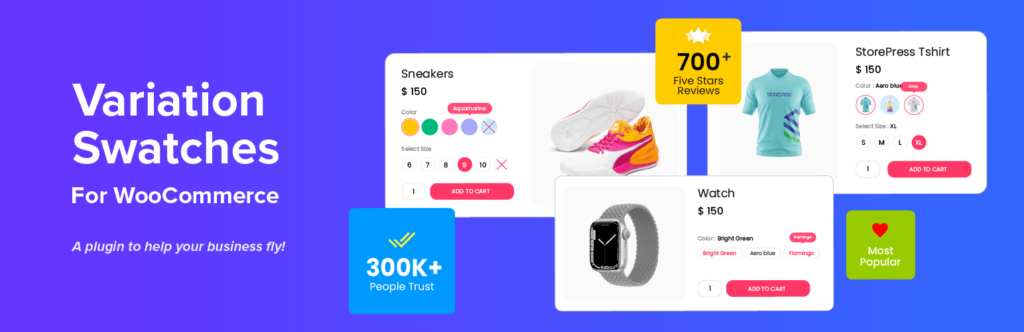
- Why it’s Smart: This plugin directly helps with product page optimization, user experience (UX), and conversion rate optimization (CRO). It changes how product choices are shown. Instead of simple dropdown menus, it lets you show options (like colors, sizes) as nice-looking swatches, buttons, or images.
- How it Helps: It makes choosing products easier. This greatly improves the user experience and helps customers find products (product discovery). Shoppers can quickly see and pick what they want. This leads to faster buying decisions and more items added to the cart (higher add-to-cart rate). This is extra important for mobile shopping, where it needs to be easy to use.
2. Additional Variation Images Gallery For WooCommerce
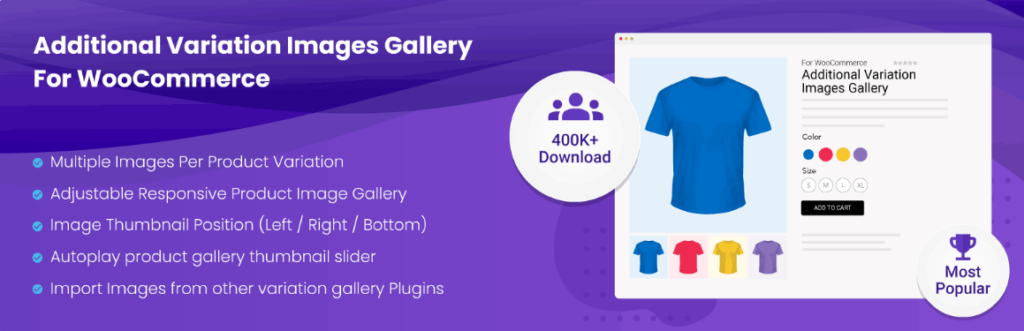
- Why it’s Smart: This plugin is very important for showing products well (visual merchandising) and making customers feel sure about buying (product confidence). It lets you upload many pictures for each specific product choice (for example, different views of a red shirt, a blue shirt, etc.).
- How it Helps: By showing many pictures for every option, customers get a much clearer idea of exactly what they are buying. This openness makes the customer experience much better. It reduces confusion and can lead to fewer returns, because customers know what to expect from the detailed pictures.
3. Payment Gateway – 2Checkout for WooCommerce
- Why it’s Smart: A good payment system is key for making checkout optimization easy and for selling to people all over the world (global selling). The 2Checkout plugin offers many ways to pay and many currencies. This is great for reaching international customers.
- How it Helps: Offering many trusted payment options stops people from leaving their carts (checkout abandonment). It fits what different customers prefer and builds trust. When customers see their favorite payment method, they feel safer and are more likely to finish buying. This directly helps with conversion optimization and making more money. It gives the payment flexibility that today’s online shoppers expect.
10. The Future of Ecommerce Strategy
The world of online selling is always changing. New technology and customer habits drive these changes. To succeed for a long time, you must know about these changes and update your ecommerce strategy. In the future, online shopping will be even more personal, offer more real-life experiences, and care more about good practices.
What will the future of ecommerce strategy look like?
- Very Personal Shopping with AI: Artificial intelligence (AI) and machine learning will make shopping even more personal. They will not just suggest products. They will guess what you need before you even know it. AI will help with changing prices, custom product offers, and even knowing what customers want ahead of time. This will make the customer journey much better.
- Real-Life Shopping Experiences: New technologies like Augmented Reality (AR) and Virtual Reality (VR) will become more common. Customers can try on clothes virtually, place furniture in their homes, or see products in 3D. This will make online shopping feel more like real-life shopping. It will help customers find products (product discovery) and feel more sure about buying.
- Voice Shopping: More people use smart speakers and voice assistants. So, buying things with your voice will grow. Making your store ready for voice search and easy voice buying will be a key way to stand out.
- Caring About Good Practices: Customers care more and more about brands that are fair and good for the environment. Future ecommerce plans must show how products are made, use eco-friendly packaging, and have good business practices. This will connect with customers who care about these things.
- Social Media Shopping Grows: Social media apps will add more shopping features. This will make it even faster to go from seeing a product to buying it. Live shopping events, working with influencers, and buying directly in apps will become more advanced. They will mix fun with shopping.
- Smooth Shopping Everywhere: The line between online and offline shopping will disappear even more. Customers will expect the same easy experience everywhere. This means on their phone, when talking to a chatbot, or in a physical store. Store optimization will include both online and physical places.
- Better Data and Smart Guesses: Being able to collect, look at, and use a lot of data will be even more important. Smart data analysis will help businesses guess future trends, manage stock better, and fix customer problems before they happen. This will improve the inventory strategy.
- New Online Commerce (Web3): While still new, blockchain and Web3 technologies could bring new ways to own things, loyalty programs, and safe payments. This might change how online selling works.
Expert Tip: Be Ready to Change
The future of online selling is not about knowing every trend. It’s about having a plan that can change and adapt easily. Always watch for new technology, listen to what customers say, and be ready to try new things quickly. Being able to change will be your biggest strength.
By keeping up with these trends and adding them to your plan, online businesses can stay strong and keep growing in the online market.
11. What to Do: Your Action Checklist
To make sure your ecommerce plan is strong and ready to grow, use this list to check and do important things:
- Set Clear Goals: Make smart goals for your online store.
- Know Your Customers: Create detailed profiles of your ideal buyers and map out their journey.
- Make Product Pages Better: Use good pictures, clear descriptions, and show customer reviews.
- Improve Conversion Rates (CRO): Make your website easy to use, remove problems, and have clear ‘Buy Now’ buttons.
- Focus on SEO: Do good keyword research, make your pages search-friendly, and ensure your website works well technically.
- Improve Mobile Experience: Make sure your website looks good and works fast on phones.
- Make Checkout Easy: Offer many ways to pay, let people buy without an account, and make the process simple to stop people from leaving their carts.
- Use Data: Always check your key numbers (KPIs), look at how customers act, and use this information to keep improving.
- Keep Customers: Start loyalty programs, send personal messages, and give great help after buying.
- Use Smart Tools: Use tools for checking data, managing customers, sending emails, and useful WooCommerce plugins (like Variation Swatches, Additional Variation Images, 2Checkout) only when they truly help solve a problem.
- Be Ready to Change: Always watch market trends, new technology, and what customers want. Change your plan when needed.
12. Key Things to Remember
- An ecommerce strategy is a full plan for an online business. It is different from just marketing.
- A good customer experience (CX) is very important. It helps you get more sales, keeps customers loyal, and increases customer lifetime value (CLTV).
- Using data to make choices, through analytics and tracking key numbers, is needed for steady growth.
- Making things better (optimization) is an ongoing job. This is true for product pages, conversion rates (CRO), and being seen on search engines (SEO).
- Mobile shopping and an easy checkout process are very important for today’s customers.
- Using the right tools, like special WooCommerce plugins, can make your store work better and give customers a better experience.
- Don’t make common mistakes like ignoring mobile use or not checking data. This is as important as doing things right.
- The future of online selling will have very personal experiences (with AI), real-life shopping (AR/VR), and a focus on good business practices.
- Successful brands are flexible, always learning, and always put their customers first.
13. Final Thoughts
Making and using a winning ecommerce strategy is a long and detailed journey. It needs you to think ahead, be able to change, and always focus on the customer. It’s more than just selling products online. It’s about building a strong online business that customers love. It uses technology smartly and always gives value.
If you follow the ideas in this guide-like understanding the customer journey, making every step better, and using smart tools-your online business can not only survive but truly grow in the busy online market. Remember, the best online stores are always learning, always changing, and always put their customers first in every plan they make.
14. Common Questions (FAQ)
What is the difference between ecommerce strategy and ecommerce marketing?
Ecommerce strategy is the big plan for an online business. It covers everything from products to how the business runs. Ecommerce marketing is just about the ways you promote and sell products for that online business.
Why is customer experience so important in ecommerce?
Customer experience (CX) is very important because it directly affects how many people buy, how loyal customers are, and how much money you make. A good CX makes shopping easy, builds trust, and makes customers buy again. This leads to customers spending more money over time.
How can I get more people to buy from my online store?
To get more people to buy, you need to make many things better. This includes making your website easy to use, simplifying the checkout, using good product pictures, showing customer reviews, and having clear ‘Buy Now’ buttons. Testing different ideas is key to finding what works best.
What are some important numbers to track for an ecommerce business?
Important numbers (KPIs) include: how many visitors buy (Conversion Rate), the average money spent per order (AOV), how much a customer spends over time (CLTV), how much it costs to get a new customer (CAC), and how many people leave their carts (Shopping Cart Abandonment Rate). Tracking these helps you see how well you are doing and where to improve.
How does making my website work well on mobile phones help my online business?
Making your website work well on mobile is very important. Many people shop on their phones. A mobile-friendly website that loads fast, is easy to use, and has a simple checkout makes customers happy. It stops people from leaving your site and helps you avoid losing sales.
What part do payment methods play in an ecommerce strategy?
Offering many safe and easy ways to pay is key for a smooth checkout. It also helps stop people from leaving their carts. Giving payment options that your customers prefer, including those from other countries, builds trust and increases sales.
How can WooCommerce plugins make an ecommerce strategy better?
WooCommerce plugins can add more features to your store. They help with specific needs. For example, plugins like Variation Swatches make product pages easier to use. Additional Variation Images help show products better. And strong payment tools like 2Checkout make checkout easy and help you sell globally.
What is EEAT and why is it important for online content?
EEAT stands for Experience, Expertise, Authoritativeness, and Trustworthiness. It’s a Google guideline for judging how good content is. For online stores, showing EEAT means having detailed product info, expert advice, clear rules, and customer reviews. This builds trust, which is good for SEO and customers.
How can I use data to make my ecommerce strategy better?
Looking at data helps you understand how customers act, how your website performs, and if your marketing is working. By tracking things like where visitors come from, how many buy, and sales numbers, businesses can make smart choices. This helps them improve their plans and find new ways to grow.
How can I stop people from leaving their shopping carts?
To stop people from leaving their carts, make the checkout process simple. Offer guest checkout, many payment options, show security badges, make pages load fast, and show how many steps are left. Sending emails to remind people about their carts can also help.
Why are product choices important in online selling?
Showing and managing product choices (like size, color) well makes shopping better. It helps customers easily find what they want. Visual tools like color swatches and extra pictures for each choice make finding products easier and reduce problems when buying.
How do suggesting more expensive items (upselling) and related items (cross-selling) help online growth?
Upselling (offering a better version of a product) and cross-selling (suggesting other products that go well with it) help increase the average money spent per order (AOV). When done smartly and usefully, they make more money without needing to find new customers.
What are the future trends in ecommerce strategy?
The future of online selling will likely include very personal shopping with AI, real-life shopping experiences (AR/VR), more voice shopping, a bigger focus on being eco-friendly, more shopping on social media, smooth shopping everywhere (online and in stores), and smart data analysis.
How is an ecommerce strategy different from a digital marketing strategy?
An ecommerce strategy is only about selling products or services online. It covers the whole business. A digital marketing strategy is wider. It covers all online ways to promote any type of business, whether it sells online or not. An ecommerce strategy uses digital marketing ideas but also includes special parts of running an online store.

